
Environmental, Social and Governance (ESG) reporting is becoming an increasingly important part of corporate transparency in the UAE. For companies listed on the Dubai Financial Market (DFM), understanding what sustainability information should be measured, managed and disclosed is now essential for maintaining investor confidence and keeping pace with evolving market expectations.
DFM has developed its ESG Reporting Guide to help listed companies improve the quality and consistency of sustainability disclosures. It is important to clarify one point: DFM’s ESG Reporting Guide itself is presented as guidance and is described by DFM as voluntary. However, ESG disclosure expectations can also arise from applicable UAE regulatory requirements and other disclosure obligations.
For listed businesses, using reliable technology such as ESG sustainability software in Dubai can make the process of collecting, monitoring and organising ESG information much easier.
Why ESG Reporting Matters for DFM-Listed Companies?
ESG information gives investors a broader picture of how a company is managed and how prepared it is for environmental, social and governance risks.
Traditional financial statements show revenue, costs, profits, assets and liabilities. ESG reporting adds another layer by showing how the company manages issues such as:
- Energy consumption and emissions
- Employee health and safety
- Workforce diversity
- Corporate governance
- Business ethics
- Climate-related risks
- Supply-chain responsibility
- Data protection and stakeholder relationships
Understanding DFM’s ESG Reporting Framework
DFM’s ESG Reporting Guide has evolved. The original guide encouraged listed companies to disclose a defined set of ESG indicators, while later updates introduced more detailed concepts and internationally recognised reporting approaches.
The 2025 update brings particular attention to:
- Double materiality: considering both how sustainability issues affect the company and how the company’s activities affect people and the environment.
- Climate-related risks and opportunities: identifying and explaining material climate issues.
- Sustainability strategies: showing how ESG considerations are integrated into business planning.
- Governance and accountability: establishing appropriate responsibilities for sustainability matters.
- Targets and performance: tracking measurable progress rather than simply making broad ESG statements.
- Gender balance and inclusivity: improving disclosure around workforce diversity, leadership representation, equal pay, and related issues.
- ISSB alignment: reflecting the direction of global sustainability-related financial disclosure standards.
What Environmental Information Should Companies Track?
The environmental section focuses on how business activities affect natural resources, climate and the surrounding environment. Depending on the company’s industry and material issues, listed companies may need to consider information such as:
- Greenhouse gas emissions
- Energy consumption
- Renewable energy use
- Water consumption
- Waste generation and disposal
- Recycling and resource efficiency
- Environmental incidents
- Climate-related risks
- Environmental targets and performance
Not every metric will be equally material for every company. A manufacturing business may have significant energy and emissions considerations, while a financial services company may have a different environmental footprint.
Social Disclosures Go Beyond Employee Numbers
The social element of ESG reporting covers how a company manages its employees, customers, communities and other stakeholders.
Listed companies should consider areas such as:
Workforce
Companies may monitor:
- Total workforce
- Employee turnover
- Gender diversity
- Training and development
- Employee engagement
- Equal opportunity
- Health and safety
Human Rights and Labour Practices
Companies should also consider whether their operations and supply chains have appropriate policies and controls relating to human rights, fair treatment and labour standards.
Community and Stakeholders
Social performance can also include community investment, stakeholder engagement, and the company’s broader social impact.
Governance Is a Core Part of ESG Disclosure
Strong governance provides the foundation for credible ESG performance. Investors want to know not only what sustainability policies a company has but also who is responsible for implementing them and monitoring results.
Governance disclosures can cover:
- Board oversight
- ESG responsibilities
- Business ethics
- Anti-corruption measures
- Risk management
- Compliance procedures
- Whistleblowing mechanisms
- Data privacy and security
- Stakeholder engagement
- Executive accountability
Climate-Related Risks Need Better Preparation
Climate issues are no longer limited to environmental departments. They can affect operations, insurance, supply chains, financing and long-term business strategy.
Companies should therefore consider both physical and transition risks.
Physical risks may include:
- Extreme heat
- Flooding
- Water stress
- Severe weather events
- Disruption to facilities or supply chains
Transition risks may include:
- New environmental regulations
- Changing customer expectations
- Technology changes
- Carbon-related costs
- Shifts towards lower-emission products
Why Manual ESG Reporting Can Become Difficult
ESG information often comes from different departments. Finance may hold energy or expenditure data, HR may manage workforce information, operations may track resource use, and compliance teams may maintain governance records.
When these records are kept in separate spreadsheets and documents, companies can face problems such as:
- Duplicate information
- Missing data
- Manual calculation errors
- Difficult version control
- Limited audit trails
- Delayed reporting
- Inconsistent reporting methods
How Can ESG Sustainability Software in Dubai Help?
Using ESG sustainability software in Dubai can give listed companies a central system for managing sustainability information.
At First Compliance, we provide ESG technology designed to help businesses collect, monitor and report ESG information while supporting recognised frameworks such as GRI, SASB and TCFD. Our platform includes dashboards, analytics, goal tracking and collaborative data management.
With a centralised platform, companies can:
- Collect ESG data from different teams
- Track sustainability goals
- Monitor performance over time
- Identify trends and gaps
- Reduce dependence on spreadsheets
- Maintain organised documentation
- Create structured reports
- Improve collaboration between departments
Build an ESG Data Management Process
Technology works best when it is supported by a clear internal process. DFM-listed companies can create a practical ESG reporting workflow by following these steps:
Step 1: Identify material ESG topics – Determine which environmental, social, and governance matters are most relevant to the company.
Step 2: Assign responsibility – Clearly define who collects, reviews and approves each type of ESG data.
Step 3: Establish data sources – Identify where each metric comes from and how frequently it should be updated.
Step 4: Set measurable targets – Create realistic targets that can be monitored over time.
Step 5: Validate information – Review data for accuracy, completeness and consistency.
Step 6: Monitor performance – Use dashboards and regular reviews to identify gaps and areas for improvement.
Step 7: Prepare disclosures – Organise the information into clear sustainability reporting that stakeholders can understand.
How First Compliance Supports Better ESG Management?
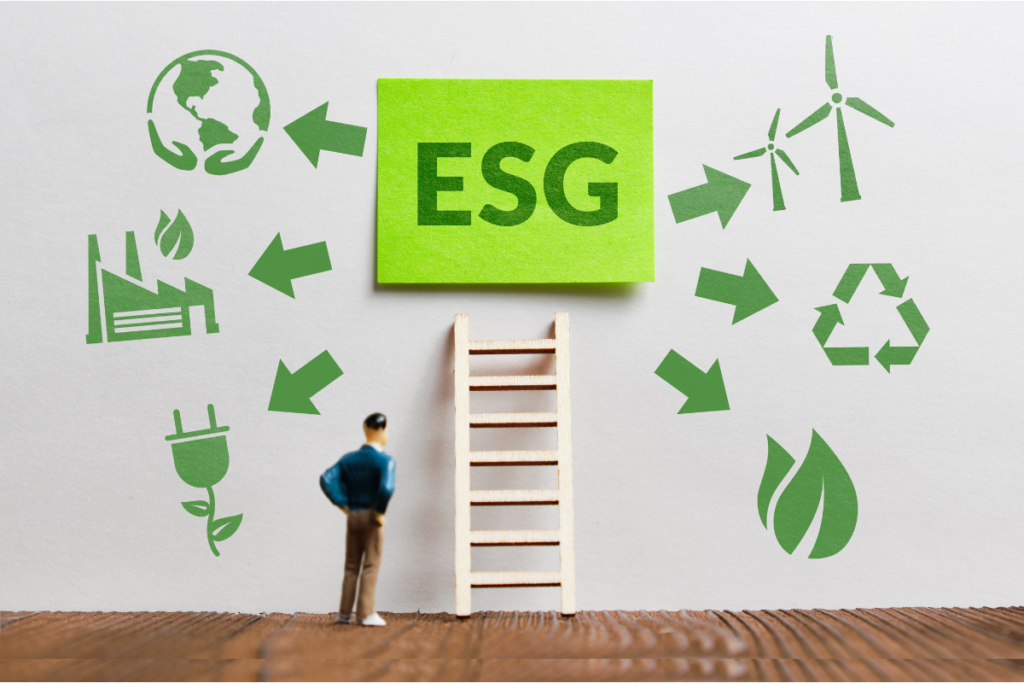
At First Compliance, we understand that compliance and sustainability reporting can involve large volumes of information. Our ESG reporting platform is designed to provide businesses with a centralised approach to ESG data and reporting.
Our solution offers:
- Real-time monitoring to keep track of ESG performance
- Centralised data management to reduce scattered information
- Dashboards and analytics to make ESG results easier to understand
- Goal tracking to monitor sustainability targets
- Process automation and integrations to connect with existing systems
- Report generation to support clear stakeholder communication
Our wider compliance technology also includes compliance monitoring and transaction monitoring solutions, allowing businesses to manage different compliance needs within a connected technology environment.
A Practical ESG Checklist for Listed Companies
Before preparing an ESG disclosure, companies should ask:
- Have we identified our material ESG topics?
- Do we have reliable sources for our ESG data?
- Are ESG responsibilities clearly assigned?
- Are climate-related risks being assessed?
- Do we have measurable sustainability targets?
- Can we demonstrate progress against those targets?
- Are our governance controls clearly documented?
- Is our ESG information consistent across reporting periods?
- Can we support important ESG statements with evidence?
- Are we prepared for increasing investor expectations?
Answering these questions can help management identify reporting gaps before they become larger problems.
Conclusion
DFM-listed companies are operating in an environment where sustainability information is becoming increasingly important to investors, regulators and other stakeholders. Although the DFM ESG Reporting Guide is presented as voluntary guidance, its recommendations provide a useful framework for developing stronger ESG reporting practices.
The most effective approach is to treat ESG as an ongoing business process rather than a once-a-year reporting task. By identifying material topics, assigning responsibilities, setting measurable targets and maintaining reliable data, companies can improve both transparency and internal decision-making.
With ESG sustainability software in Dubai, businesses can further simplify data collection, monitoring, and reporting. At First Compliance, we help organisations use technology to bring ESG information into one structured system, making sustainability management more practical, and ready for the future.
Frequently Asked Questions
Is DFM ESG reporting mandatory for every listed company?
DFM’s ESG Reporting Guide itself is described by DFM as voluntary guidance for listed companies. However, other UAE regulatory and disclosure requirements may apply depending on the company and its circumstances.
What are the three main areas of ESG reporting?
ESG stands for Environmental, Social and Governance. Environmental covers issues such as emissions, energy and waste. Social includes employees, health and safety, diversity and community matters. Governance covers areas such as board oversight, ethics, risk, and compliance.
Why do listed companies need accurate ESG data?
Accurate data helps companies prepare credible disclosures, monitor progress and give investors and other stakeholders a clearer understanding of sustainability performance. Good data also helps management identify risks and make better decisions.
How can ESG sustainability software in Dubai help?
ESG sustainability software in Dubai can centralise ESG data, automate parts of the reporting process, monitor targets, provide dashboards and help teams maintain organised sustainability information. First Compliance offers a platform designed to support ESG reporting and monitoring for Dubai and UAE businesses.
Does ESG reporting only apply to environmental issues?
No. Environmental issues are only one part of ESG. A complete ESG approach also considers social matters such as workforce practices and safety, as well as governance issues including ethics, board oversight, risk management, and compliance.
How can First Compliance support ESG reporting?
First Compliance provides ESG reporting and sustainability technology that helps businesses collect and manage ESG information, monitor goals, analyse performance, and generate reports. Our platform also supports alignment with internationally recognised frameworks including GRI, SASB and TCFD.